Histology
Better paraffin sections on a rotary microtome
Thick and thin sections, chatter, crumbling ribbons. Most sectioning problems come down to block temperature, blade condition and a few machine settings.
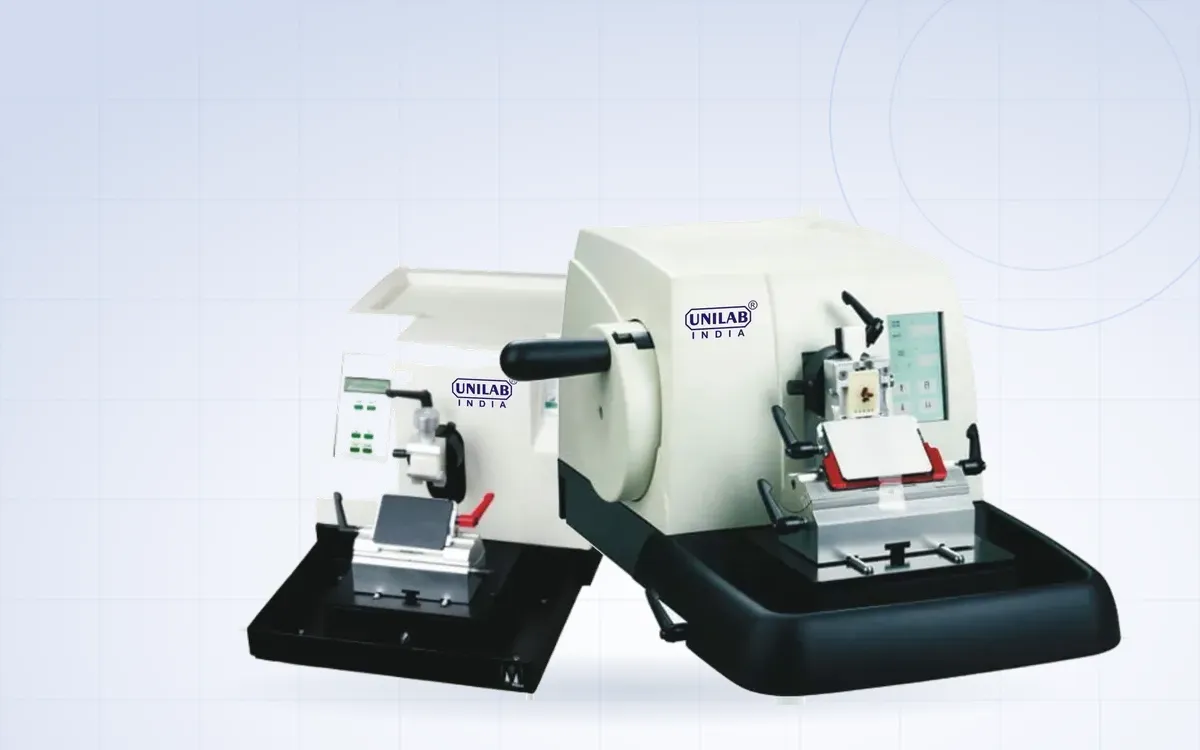
A good section starts long before the microtome. Fixation, processing and embedding all affect how a block cuts. But when the block is sound and the sections still come out badly, the cause is usually something at the microtome that can be fixed quickly.
Start with a well-made block
The tissue should be fully infiltrated with paraffin and the block should be firm, square and free of bubbles. An embedding station with a heated paraffin dispenser and a cold plate makes consistent blocks much easier: tissue is oriented in molten wax, then the block is set quickly on the cold plate.
Trim, then section
Trim the block at a thicker setting until the full face of the tissue is exposed. Then switch to the section thickness you need. For routine H&E sections, laboratories commonly cut in the range of about 3 to 5 µm. Motorised feed and a trimming mode on the microtome save time and keep trimming separate from fine sectioning.
Keep the block cold
Paraffin cuts best when the block is cold. Placing faced blocks on ice or a cold plate for a few minutes before sectioning helps produce thin, even ribbons. If sections start to crumble or vary in thickness as you work, the block has probably warmed up. Cool it again.
Use a sharp, clean blade
A dull or nicked blade causes lines, tearing and compression. Move to a fresh part of a disposable blade, or replace it, as soon as you see scoring. Keep the blade edge free of wax build-up. Use the blade guard whenever you are not actively sectioning.
Fix chatter and thick-thin sections
Chatter shows as bands of thick and thin tissue across the section. Check, in this order:
- The block is clamped tightly in the specimen holder.
- The blade holder and blade are tight.
- The clearance angle is set correctly for your blade holder.
- The block is not too warm or too hard for the tissue.
- You are turning the handwheel at a steady, even speed.
Floating and picking up
Float the ribbon on a water bath set a little below the melting point of your paraffin, so the sections flatten without the wax melting. Separate individual sections, pick them up on clean slides and drain before drying.
Safety
Microtome blades are extremely sharp. Lock the handwheel and engage the blade guard before you touch the block or change a blade. Use the brakes and locks the machine provides every time.
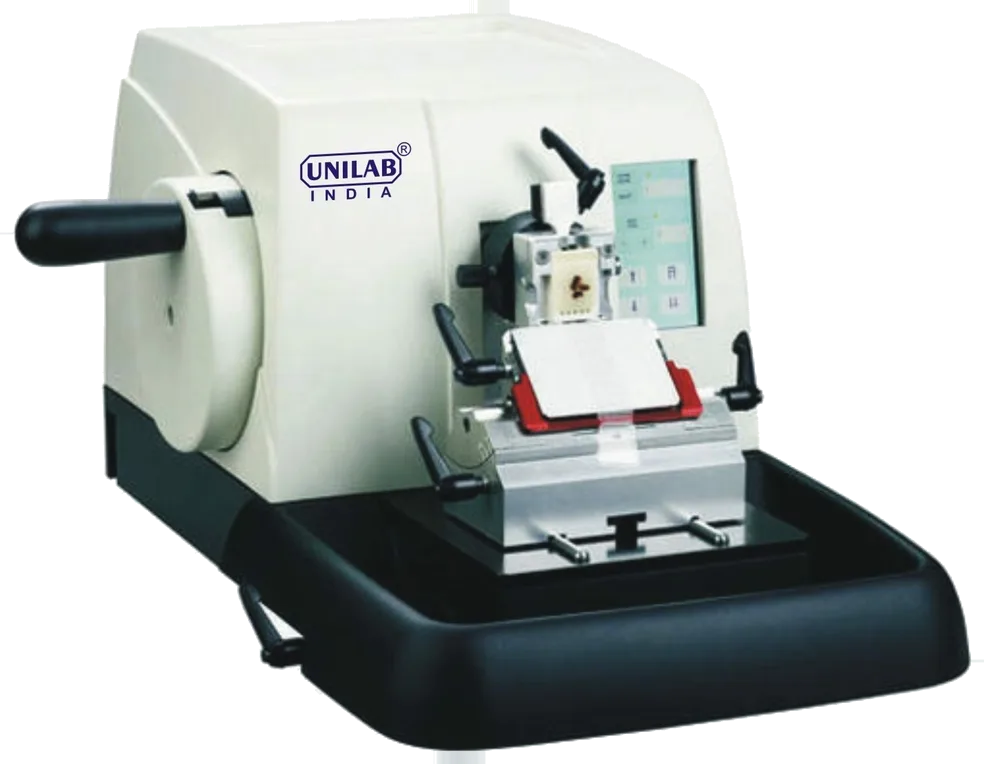
Semi-Automatic Rotary Microtome
For sectioning of organic tissue into thin sections for microscopic examination of specimens.
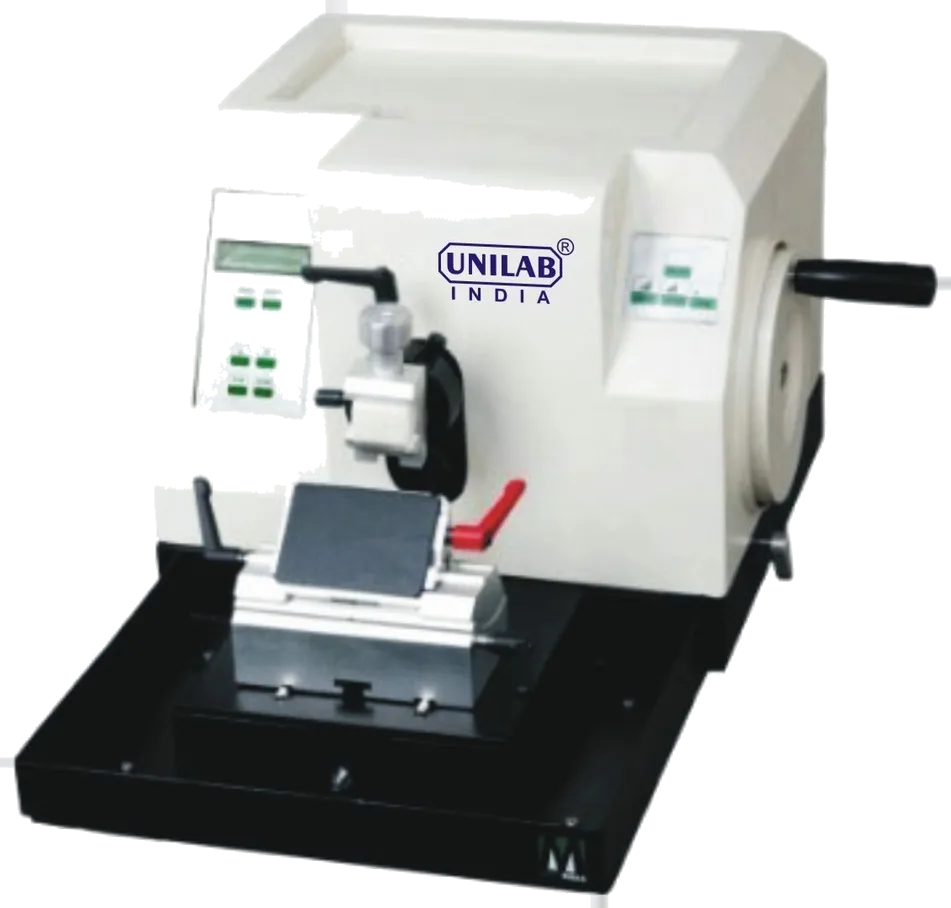
Rotary Microtome with Touch Screen
For sectioning of organic tissue into thin sections for microscopic examination of specimens.
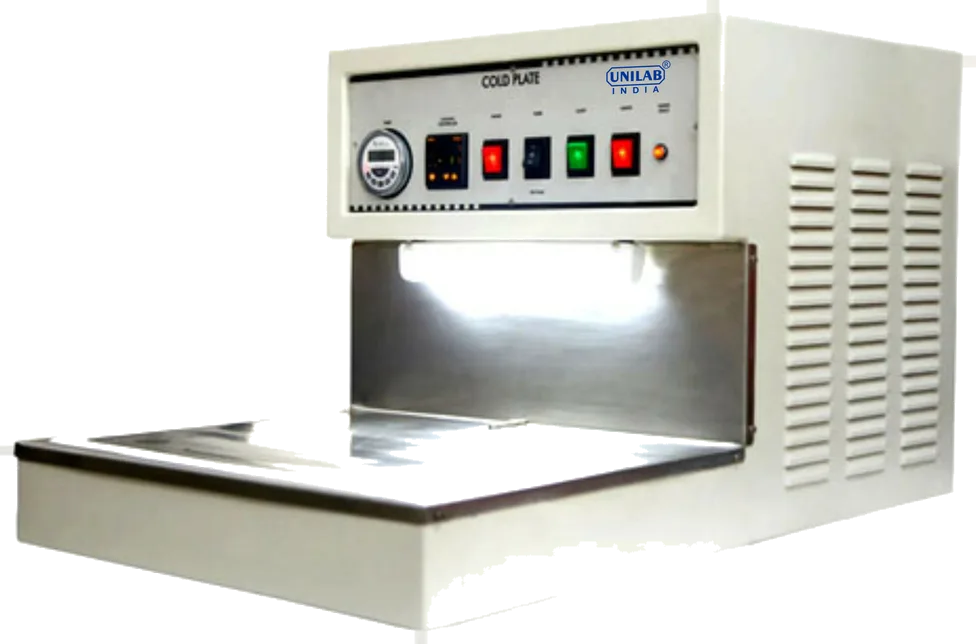
Tissue Embedding Station
For to be used for the preparation of wax tissue blocks.