How to choose a laboratory microscope: eight questions to answer first
Before you compare models or prices, settle these eight questions. They decide most of the specification for you.
Buying guides, technique and care for the people
who choose and use laboratory instruments.
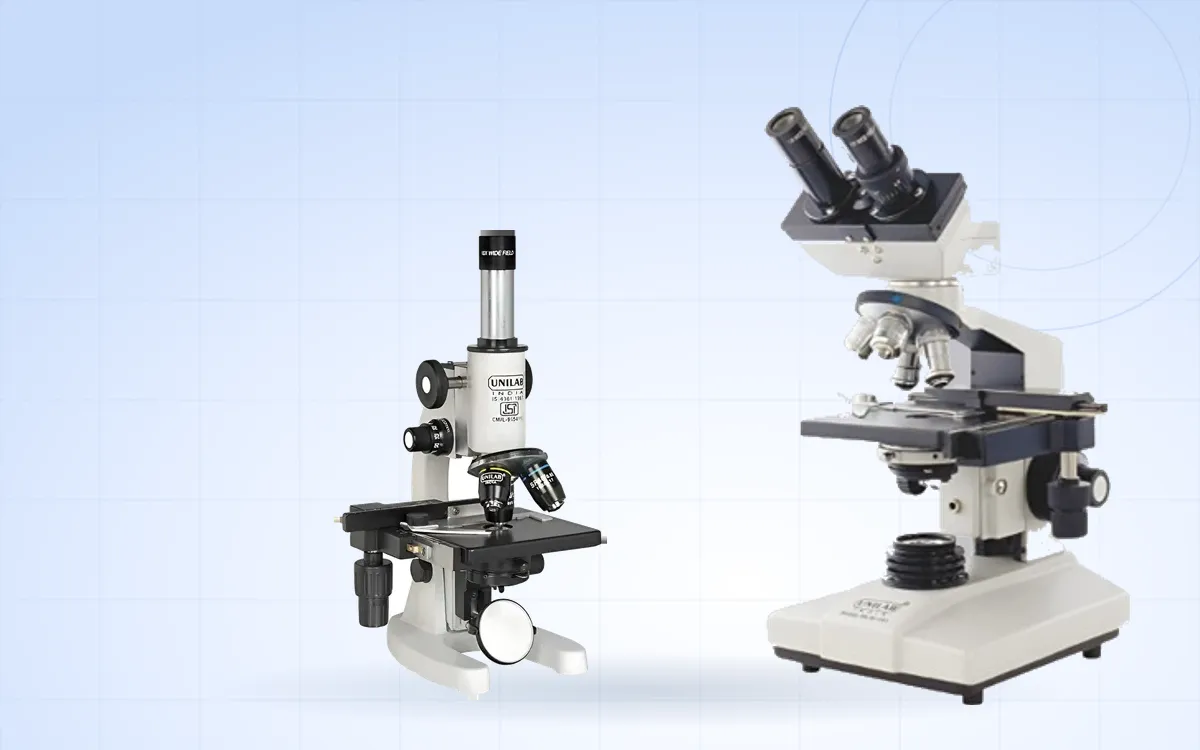
Before you compare models or prices, settle these eight questions. They decide most of the specification for you.
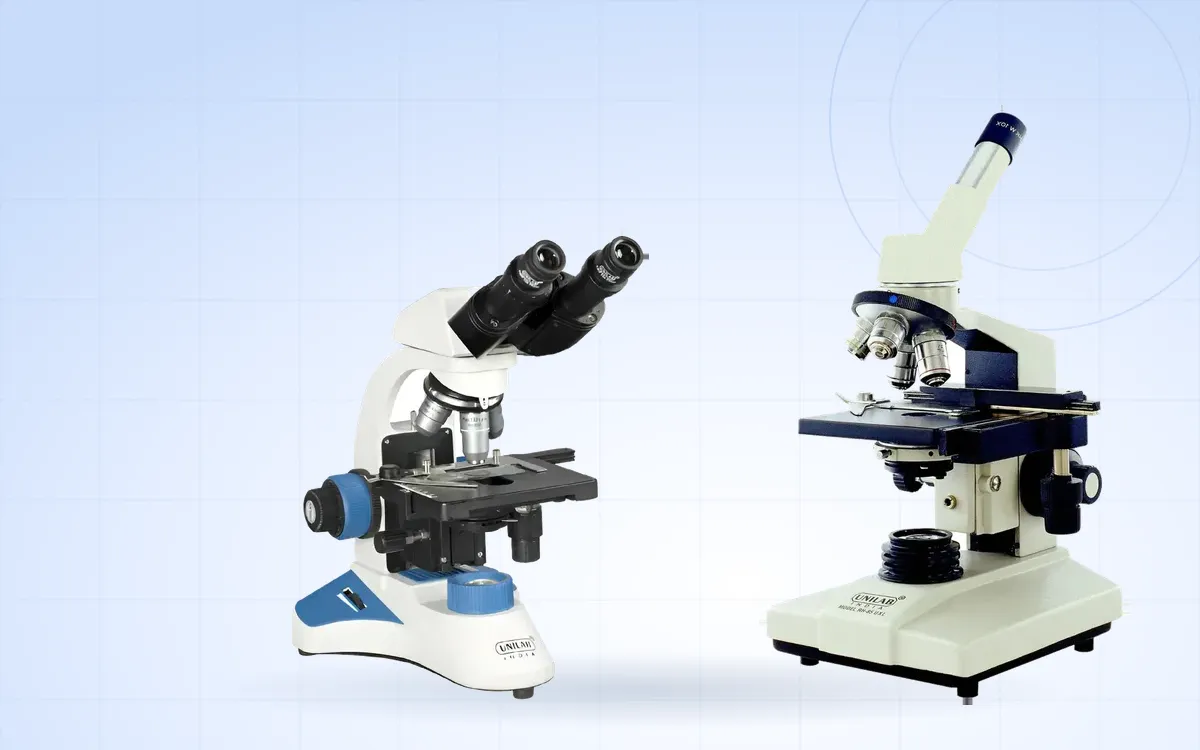
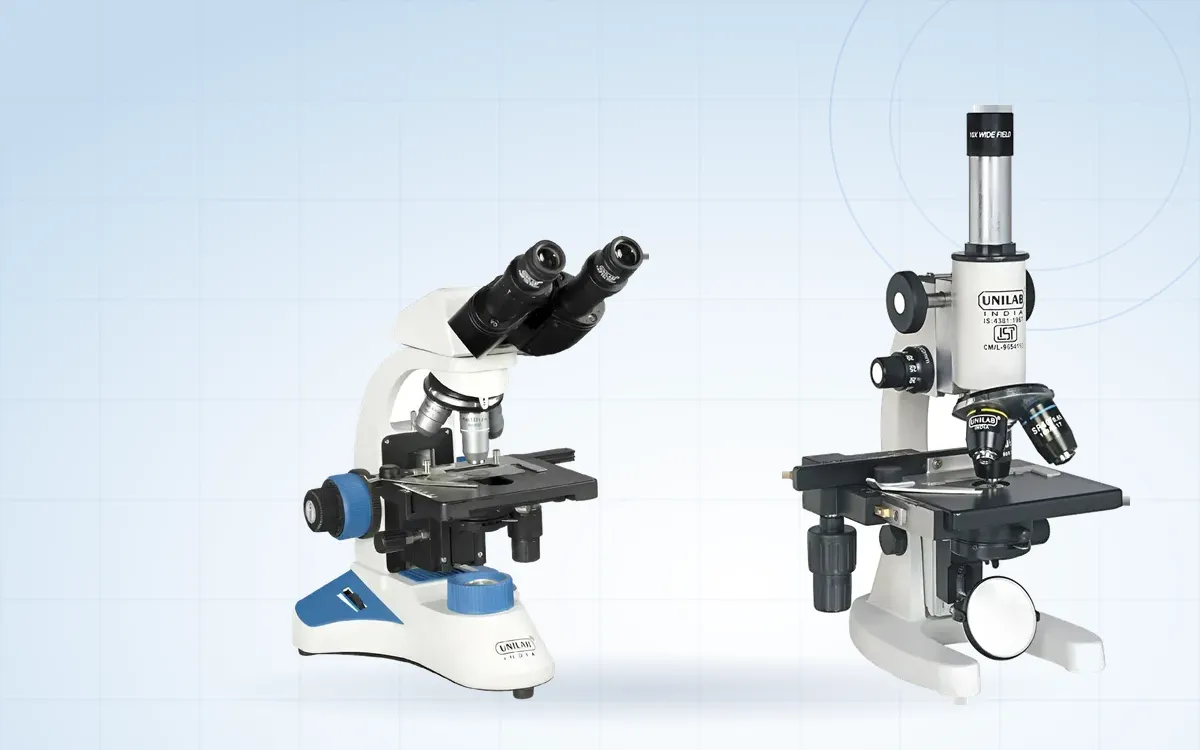
The viewing head changes comfort, cost and what you can do with the image. Here is how the three types compare in daily use.
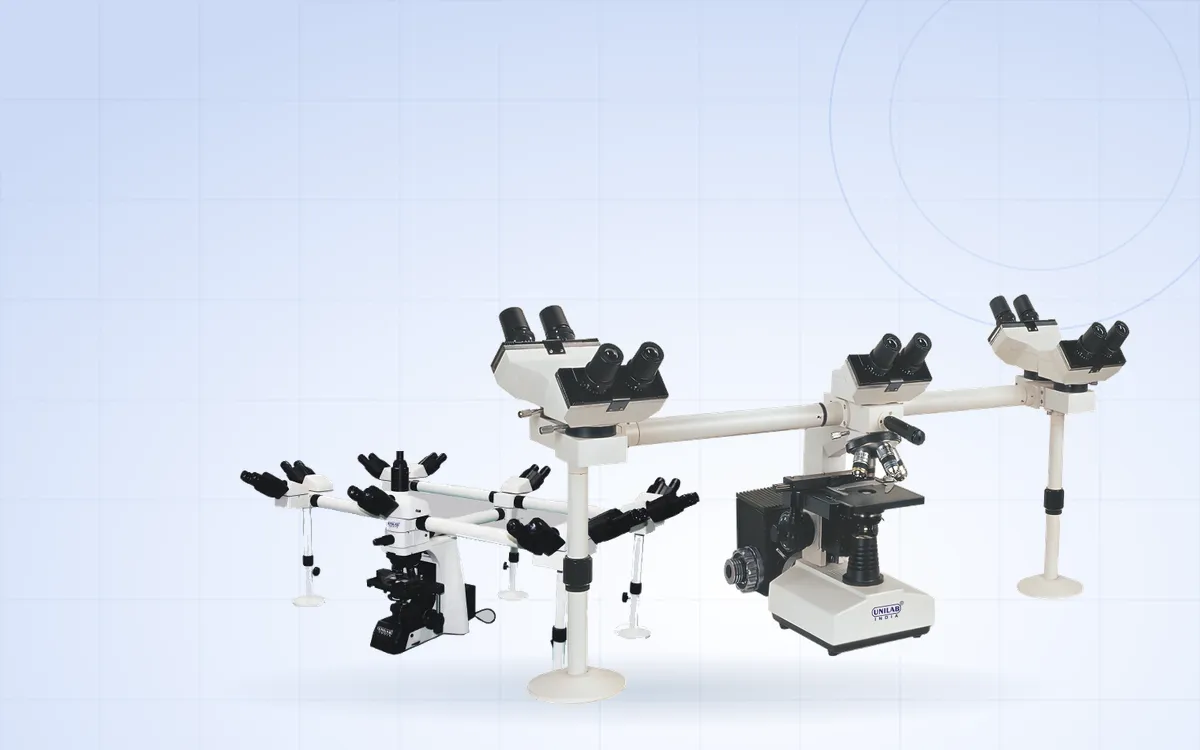
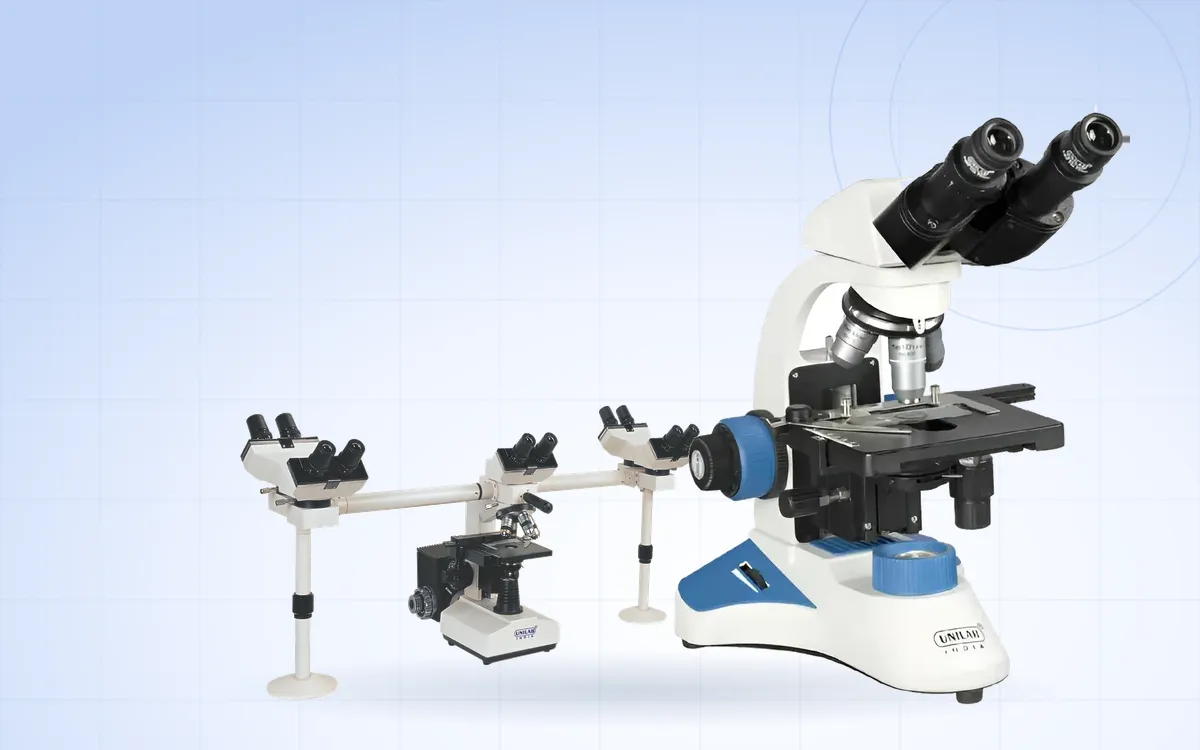
Five or ten people looking at the same field changes how pathology is taught and discussed. What to plan for before you buy one.
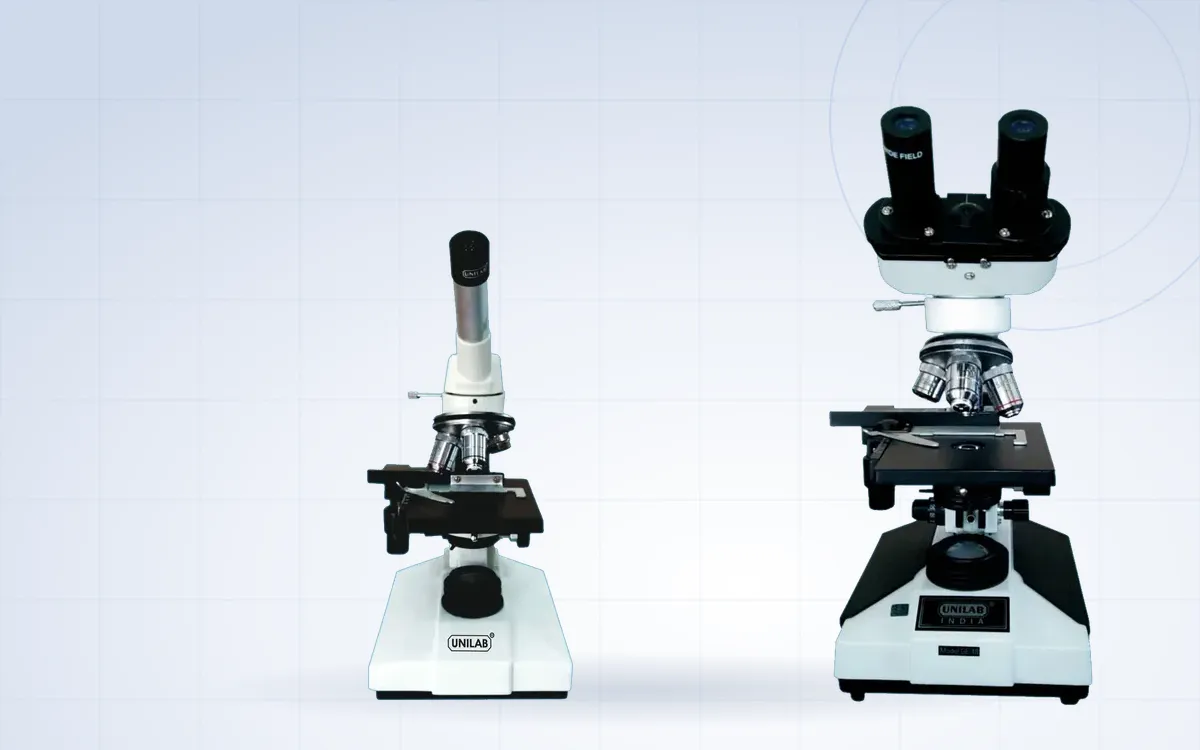
IS 4381, IS 5204, ISI marks, test reports and numerical aperture. What the common fields on a GeM microscope listing mean, in plain terms.
Dust, immersion oil and humidity cause most microscope problems. A few habits at the end of each session prevent nearly all of them.
Even, bright and sharp. Setting up Köhler illumination takes about a minute and makes a visible difference to every slide you look at.
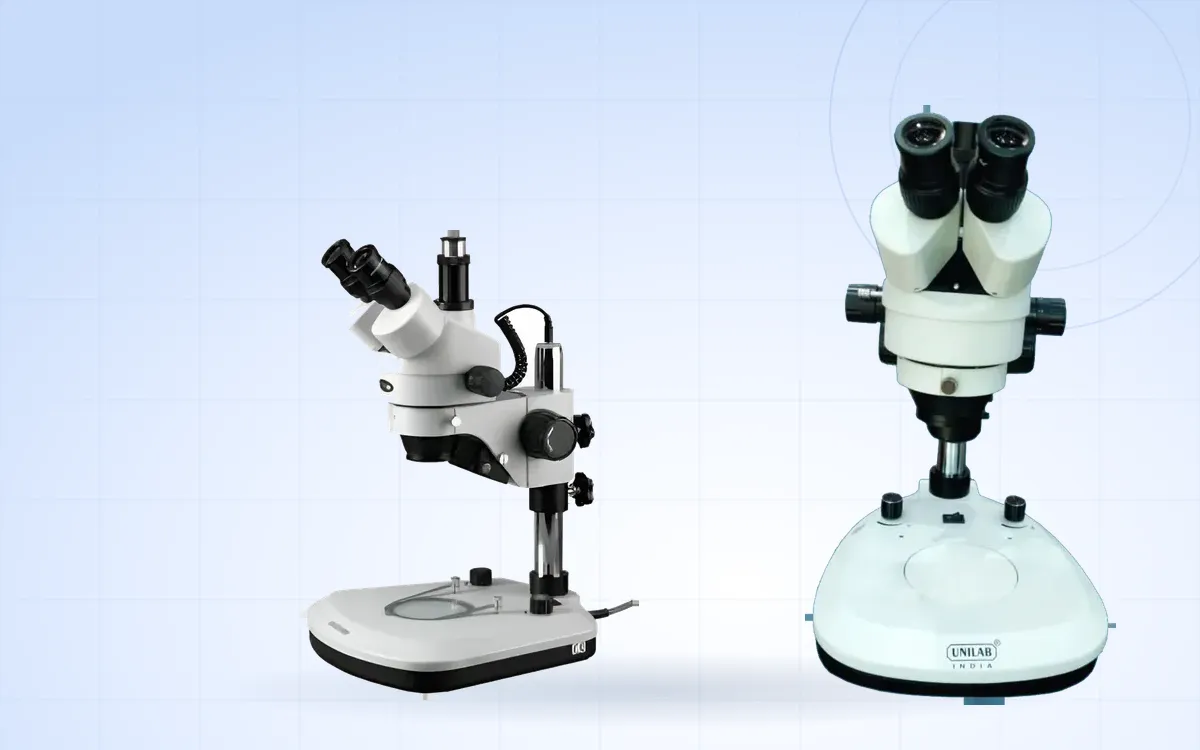
One gives a three-dimensional view of whole objects at low power. The other looks through thin specimens at high power. Choosing between them starts with the sample.
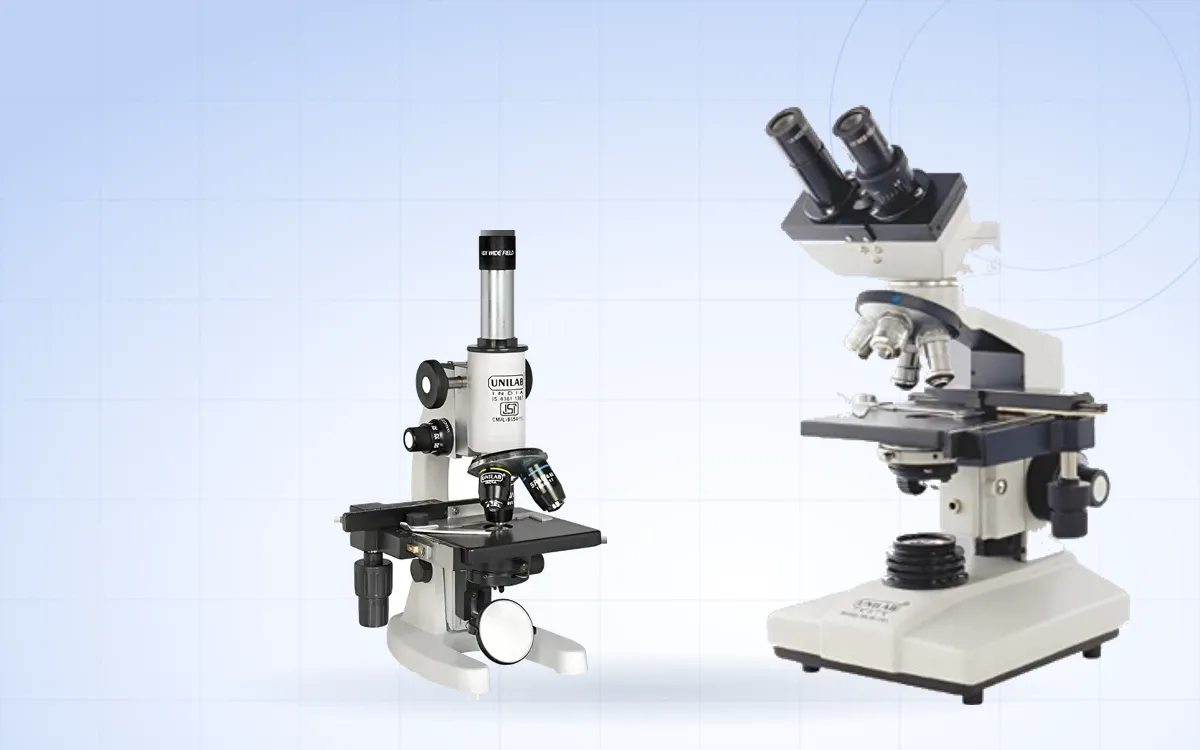
The 100x objective shows the finest detail your microscope can resolve, but only with the right oil, the right order of steps and careful cleaning afterwards.
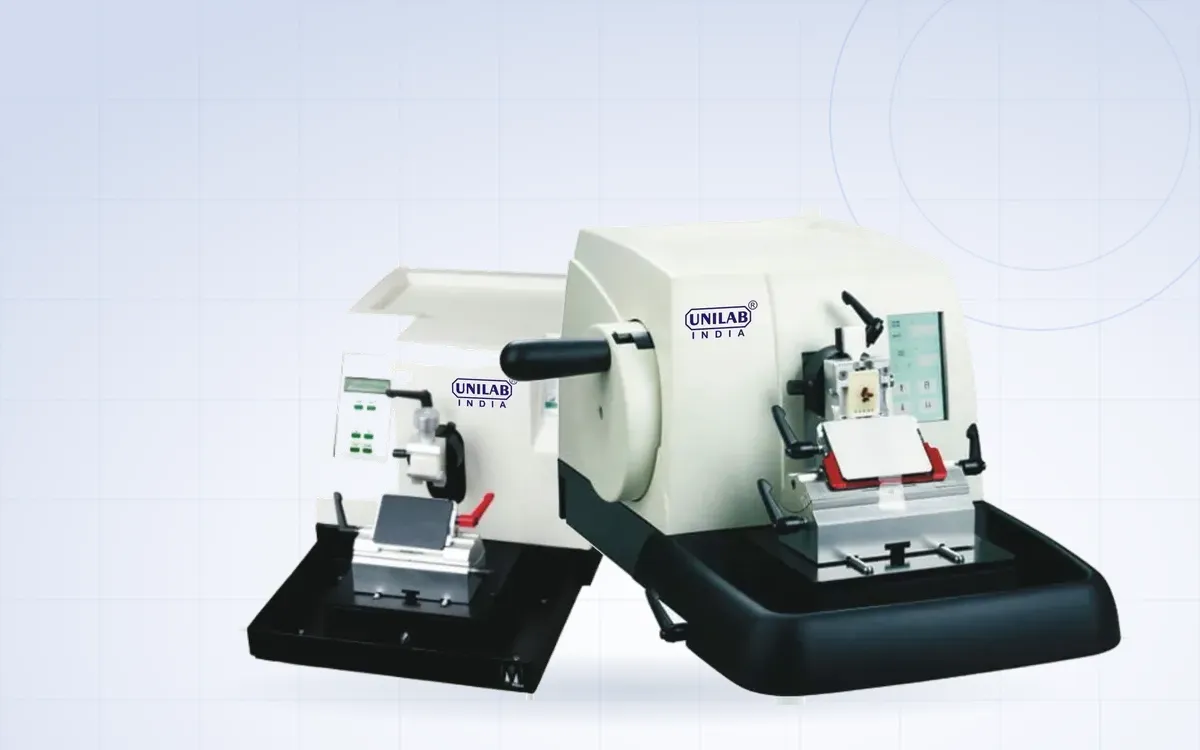
Thick and thin sections, chatter, crumbling ribbons. Most sectioning problems come down to block temperature, blade condition and a few machine settings.
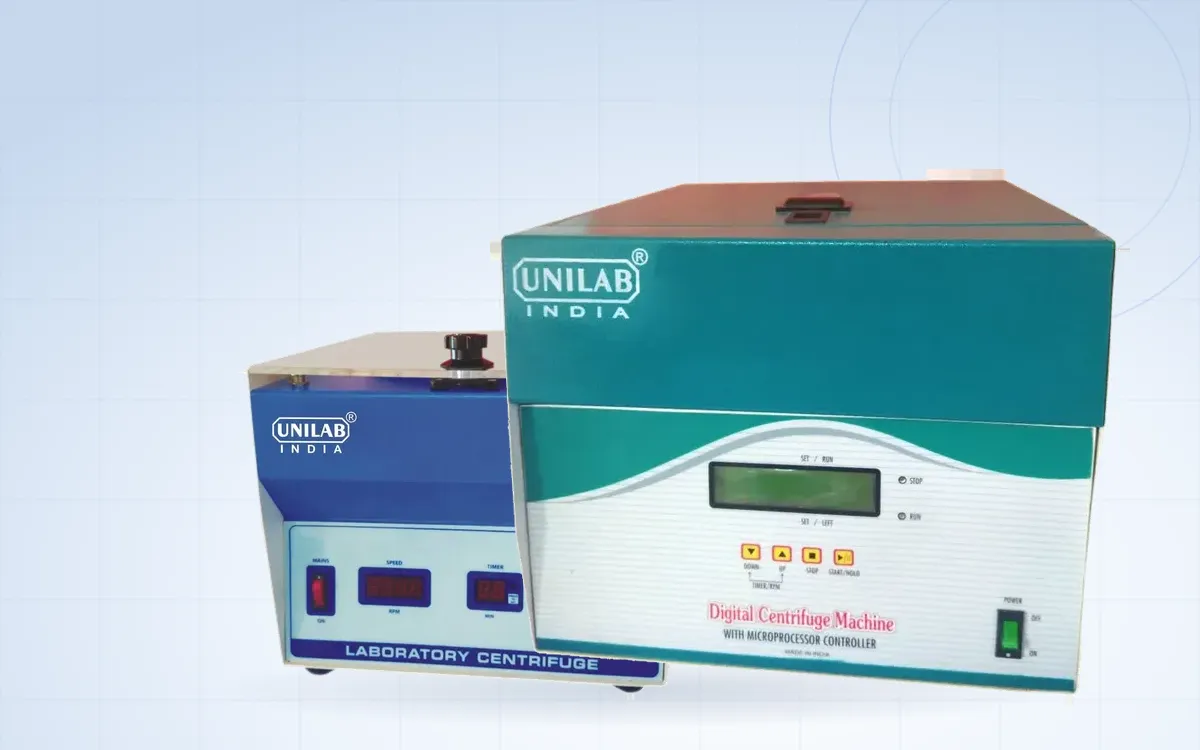
Two centrifuges at the same RPM can spin samples with very different force. How to convert between RPM and g, and a few habits for safe, consistent runs.
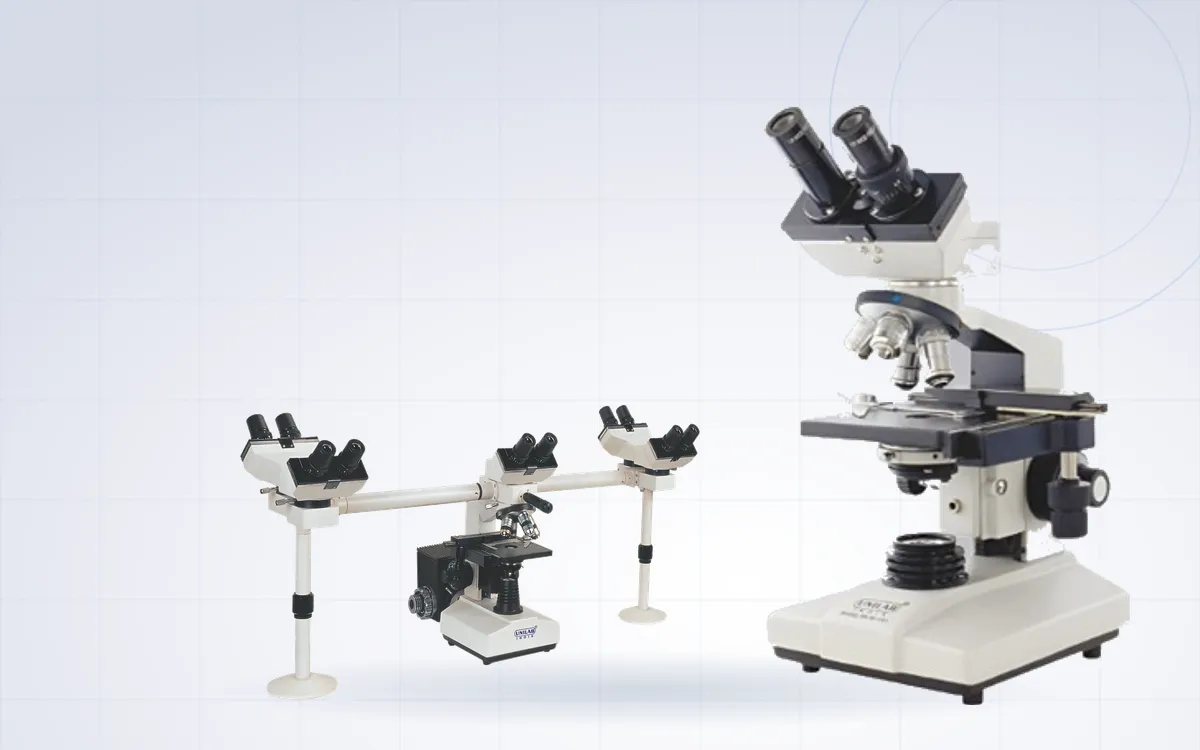
From hand-ground lenses in seventeenth-century Holland to LED-lit research stands. The handful of ideas that made the modern microscope.
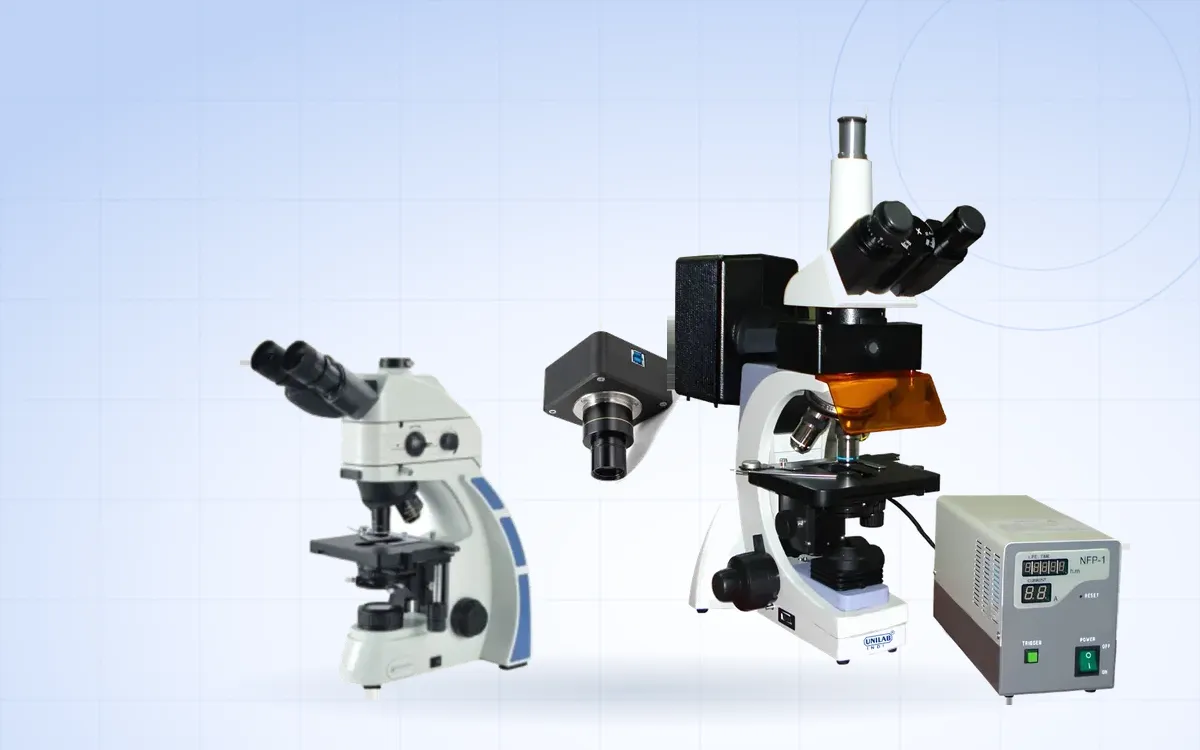
Filters, light sources, a dark room and a few working habits. A practical overview for laboratories adding fluorescence to routine microscopy.
A short guide for government laboratories, hospitals and colleges buying instruments on the Government e-Marketplace.