Buying guide
Monocular, binocular or trinocular: picking the right viewing head
The viewing head changes comfort, cost and what you can do with the image. Here is how the three types compare in daily use.
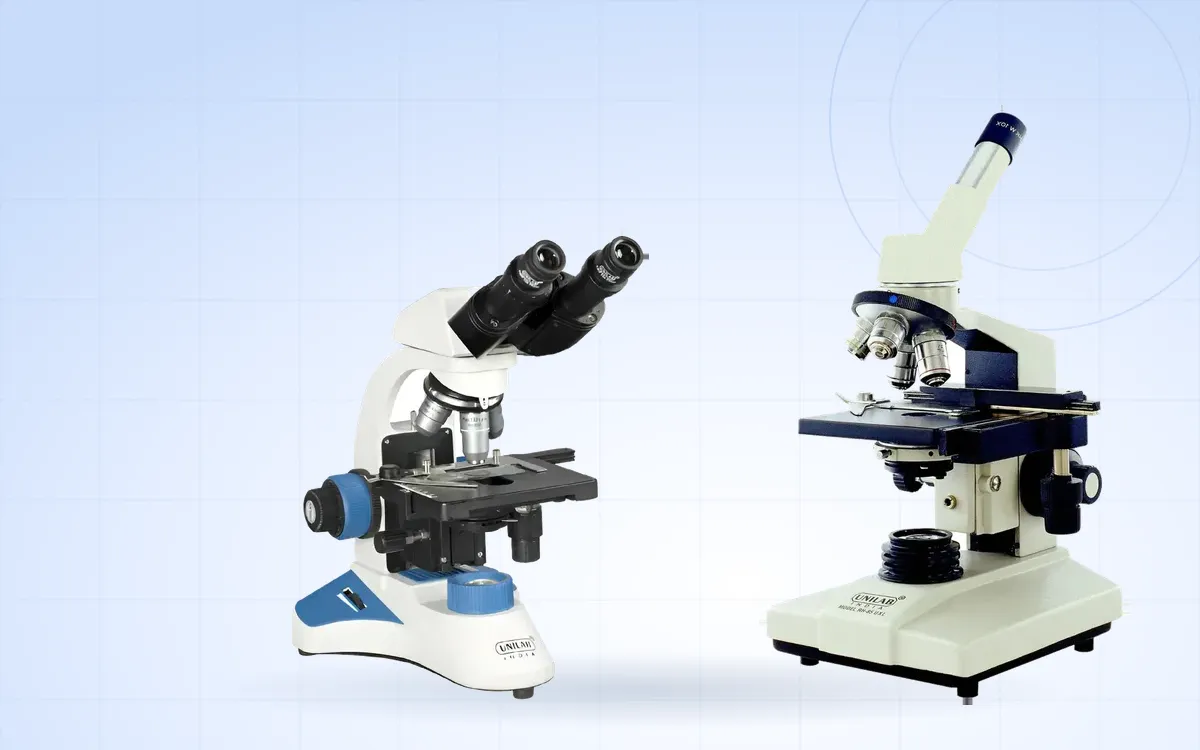
The head is the part of the microscope you look into. It holds the eyepieces and sends the image from the objective up to your eyes. The optics below it can be identical across three models, yet the head you choose still shapes how the microscope is used every day.
Monocular: one eyepiece
A monocular head has a single eyepiece. It is simple, sturdy and the least expensive option, which is why it is common in schools, colleges and small clinics.
It works well for short sessions: checking a slide, a quick count, a practical class where each student looks for a few minutes. The drawback shows up over longer periods. Closing or ignoring one eye for an hour is tiring, and most people find their concentration drops.
Choose monocular when the microscope is used briefly by many people, or when budget is the deciding factor.
Binocular: two eyepieces
A binocular head splits the light so both eyes see the image. This is the standard for pathology, haematology and research work, and for good reason. Viewing with both eyes is more relaxed, and users can work much longer without strain.
Two adjustments matter here:
- Interpupillary distance. The eyepiece tubes slide closer or further apart to match the distance between your eyes. Set it so you see one round field, not two.
- Diopter adjustment. One eyepiece can be focused separately to correct for a difference between your eyes. Focus with the fixed eyepiece first, then adjust the other.
Many heads also rotate through 360 degrees, which helps when two people share a bench or when the microscope is used from the opposite side.
Choose binocular when one person reads slides for long periods.
Trinocular: two eyepieces and a camera port
A trinocular head adds a third tube on top for a camera. Depending on the design, a lever or slider sends light to the eyepieces, to the camera, or to both.
This is the right choice when images need to leave the microscope: pathology reports, teaching slides, quality records or remote second opinions. You keep comfortable binocular viewing and can attach a microscope camera, or in some systems a DSLR, without disturbing your work.
If you think you might want images later, buy trinocular now. Adding a camera port to a binocular microscope afterwards is not practical.
A quick way to decide
| Situation | Head |
|---|---|
| Short sessions, many users, tight budget | Monocular |
| Daily slide reading, long sessions | Binocular |
| Reports, teaching material, documentation | Trinocular |
If a group needs to look at the same slide at the same time, none of these is enough on its own. That is the job of a multi-head teaching microscope, which we cover in a separate article.
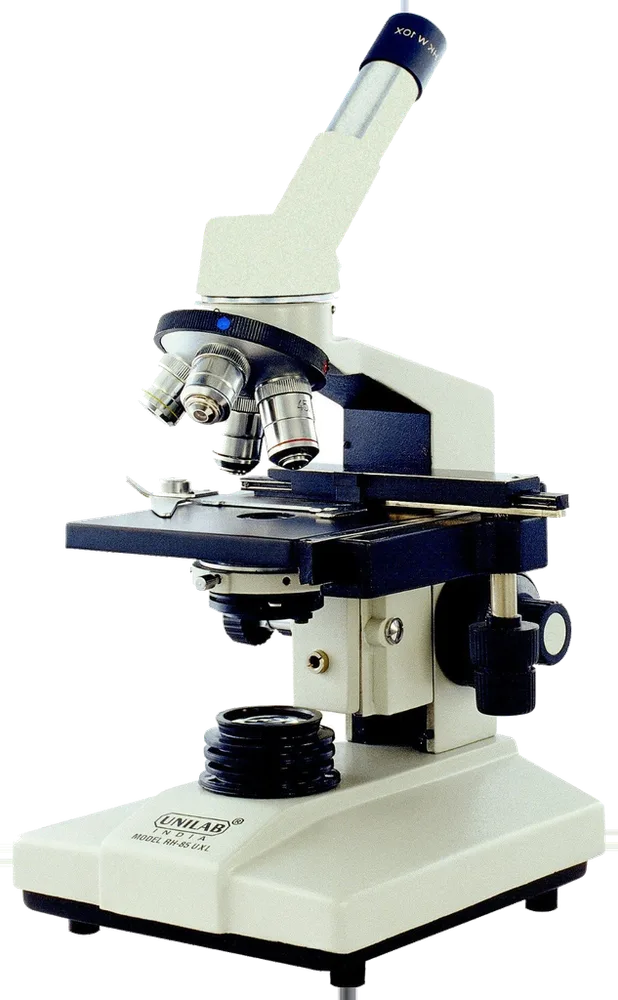
Monocular Inclined Microscope
Used for comfortable magnified viewing of specimens through a single inclined eyepiece.
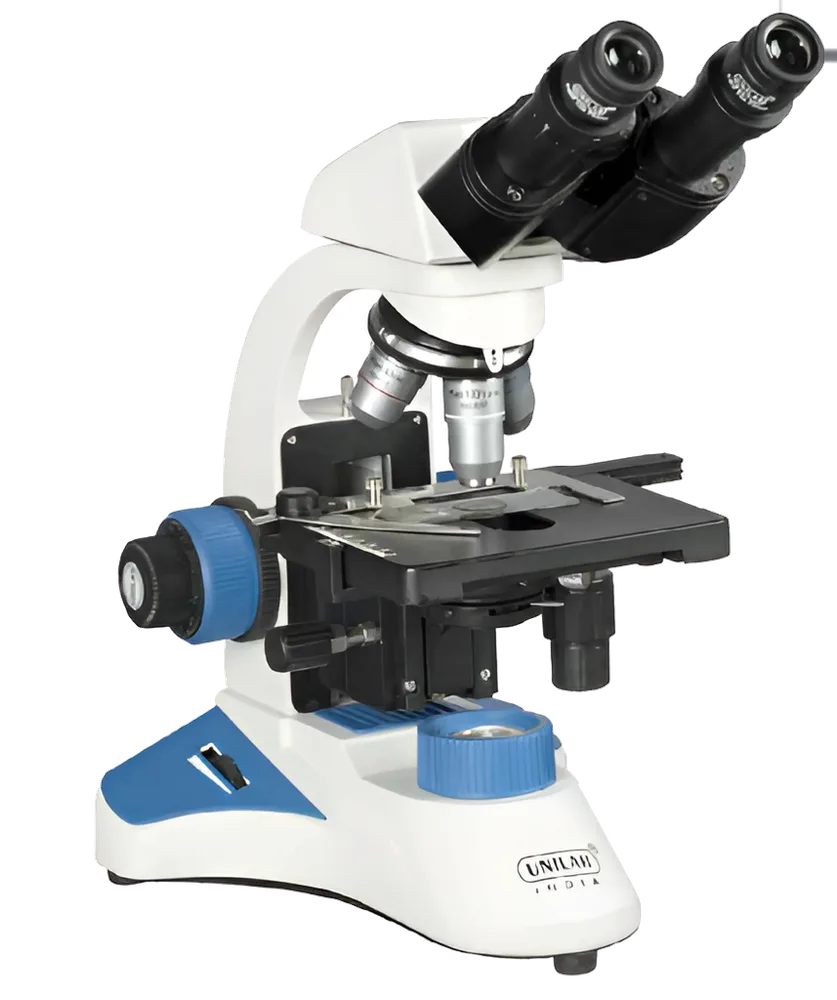
Binocular Research Microscope
Used for high-precision microscopic examination in research and laboratory applications.
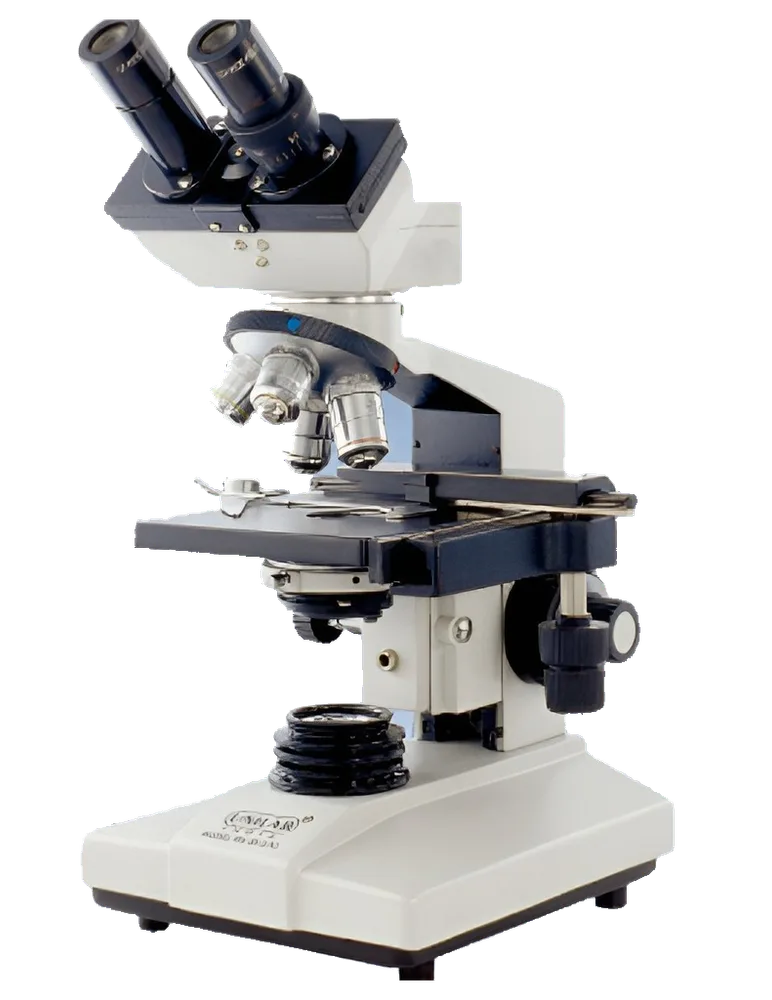
Trinocular Research Microscope
Used for advanced microscopic viewing and imaging in research labs.