Procurement
Reading microscope specifications on GeM tenders
IS 4381, IS 5204, ISI marks, test reports and numerical aperture. What the common fields on a GeM microscope listing mean, in plain terms.
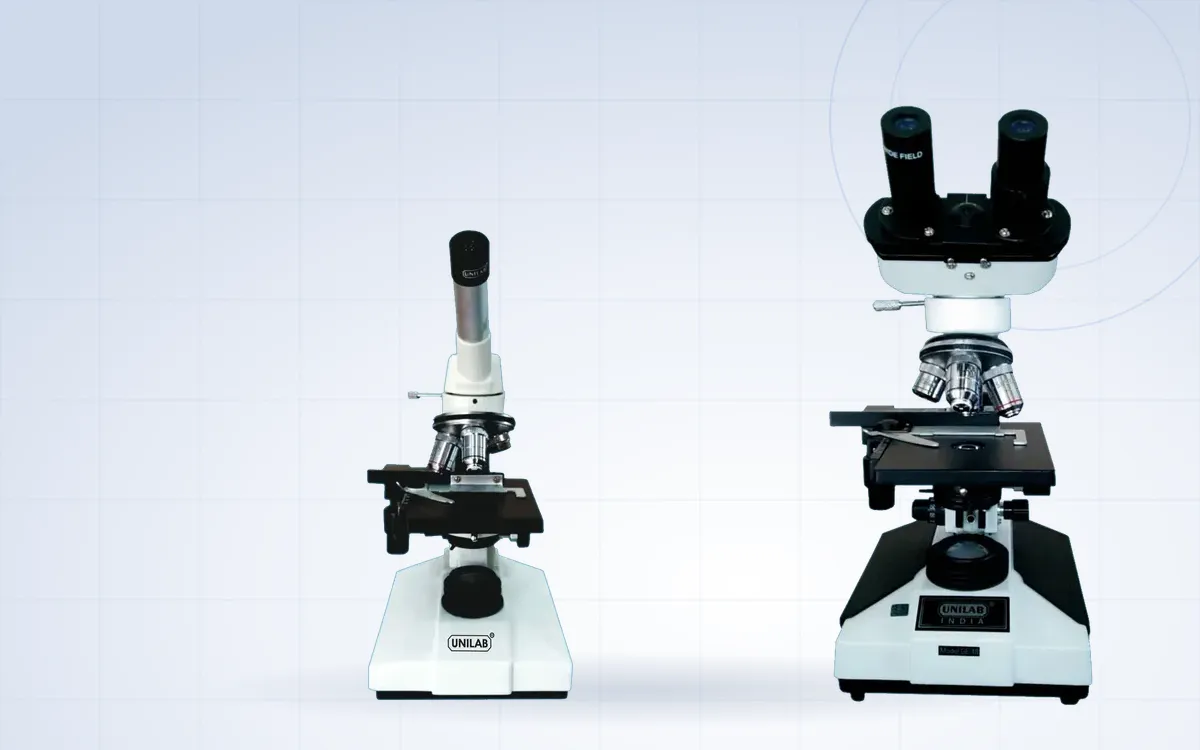
Microscopes on the Government e-Marketplace are listed against a fixed set of specification fields. Buyers select values for these fields when they create a bid, and sellers declare their product's values when they list it. If the fields are unfamiliar, it is easy to pick values that exclude good products or let unsuitable ones through.
This guide walks through the fields you will see most often. It is not legal or procurement advice. Always follow your organisation's rules.
Indian Standard: IS 4381 and IS 5204
Listings in the pathological and research microscope category state which Indian Standard the instrument conforms to. Pathological microscopes are listed against IS 4381 and research microscopes against IS 5204. Decide which kind of instrument the work actually needs. A routine clinical laboratory and a research department often need different things.
ISI marked and BIS licence
An ISI mark means the manufacturer holds a licence from the Bureau of Indian Standards for that product standard. If your bid asks for an ISI-marked product, the evaluation should check that the licence is valid and that the mark is on the instrument when it arrives.
Test report from an accredited lab
Many listings state that a test report from a government, NABL or ILAC-accredited laboratory is available. If conformity matters for your purchase, ask for a copy at the time of supply and keep it with the asset record.
Microscope type
You will see descriptions such as "pathological monocular, non-hinged, with built-in light and intensity regulator" or "research trinocular". The important parts are:
- Monocular, binocular or trinocular for the viewing head.
- Hinged or non-hinged. Non-hinged stands are rigid, with the arm fixed to the base.
- Built-in light with a regulator. The illumination is part of the stand and its brightness can be adjusted.
Eyepiece type
Huygenian eyepieces are a simple, economical design often found on monocular microscopes. Compensating eyepieces are designed to work with matching objectives to reduce colour fringes, and are common on binocular and research models. The magnification, usually 10x, is listed alongside.
Objectives and numerical aperture
The objective field lists magnifications such as 4x, 10x, 40x and 100x, and a type such as achromatic or plan achromatic. Numerical aperture (N.A.) describes how much detail an objective can resolve. For a 100x oil-immersion objective, N.A. 1.25 is typical. Higher numbers resolve finer detail.
Stage, focusing and micrometer
Stage size is given in millimetres, for example 135 x 145. Co-axial focusing means the coarse and fine knobs share one axis, which is easier to use. A micrometer arrangement lets the stage position be read and repeated.
Illumination
Most current listings specify LED. It runs cool and lasts much longer than halogen.
A practical approach
Start from the work, not the field list. Decide what the laboratory examines, how many hours a day, and whether images are needed. Then pick field values that describe that instrument and avoid adding restrictions that no real product meets. If you would like help translating a requirement into GeM specifications, send it to us and we will suggest suitable values.
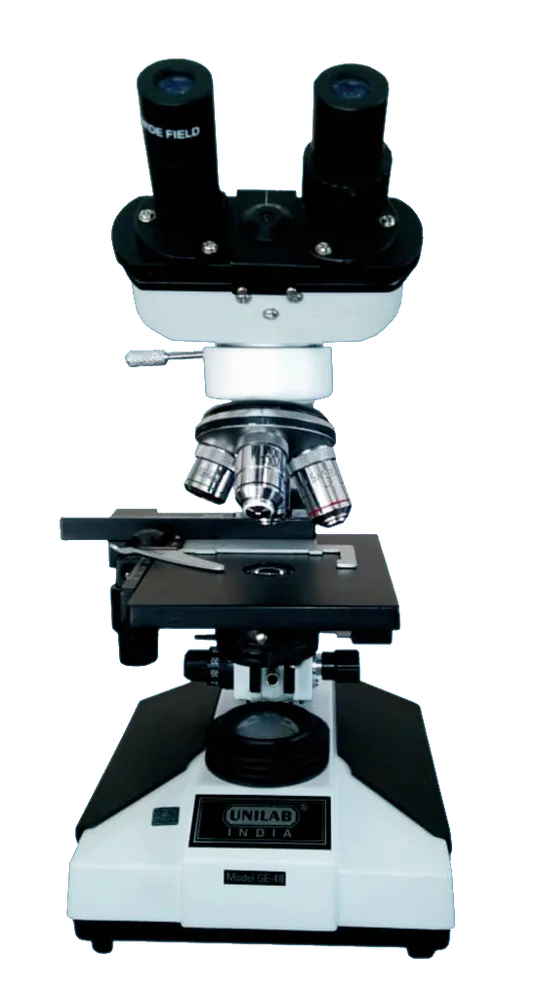
Binocular Research Microscope
Best for: Research (IS:5204)
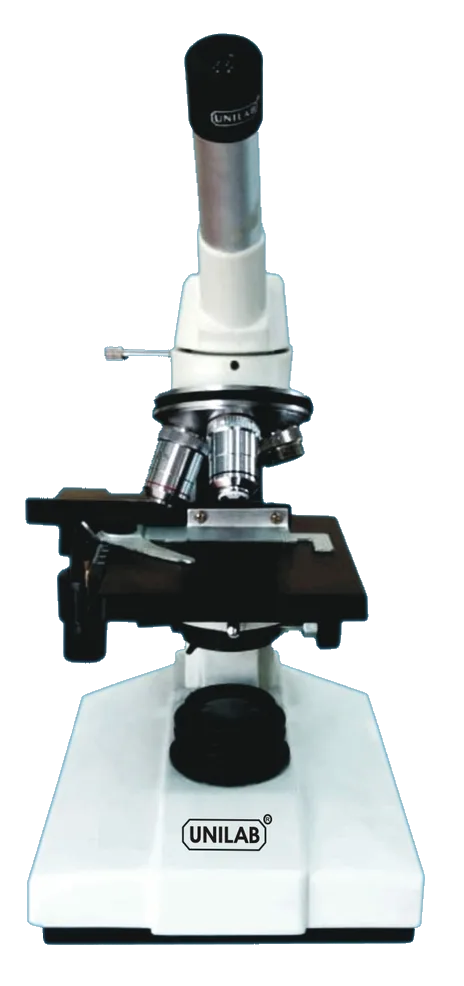
Pathological Monocular Microscope
Best for: Clinical & pathology labs
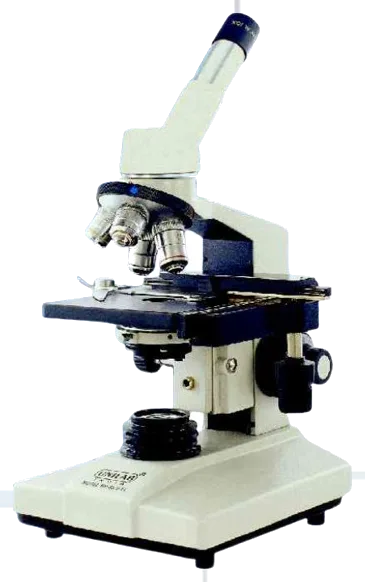
Pathological Monocular Microscope
Best for: Clinical & pathology labs